
AI isn’t “coming someday.” It’s here, it’s public, and it’s already quietly printing money for the people who learn how to build with it instead of just scroll past it.
While most marketers are still “figuring out this AI thing,” a small group of creators are using GPT-powered tools to:
- Launch digital products in a weekend
- Automate their content, sales, and email marketing
- Build assets that work 24/7 without support tickets or fulfillment
And the wild part?
You can do it without coding, developers, or tech headaches.
If you can write a Google Doc, you can build a GPT.
In this pillar post, you’ll learn how to:
- Turn a simple idea into a working GPT tool in a weekend
- Create a free version that builds your list and a Pro version that makes sales
- Generate all your funnel copy (pages, emails, posts) in about an hour
- Promote and scale your GPT like a real product—not just a “cool toy”
You’ll also see how a tool like GPT Creator Pro can act as your AI product factory—so each weekend can mean a new asset, a new funnel, and a new income stream.
Why GPTs Are the Ultimate Digital Product Right Now
The Digital Gold Rush Has Shifted
We’ve already lived through a few big waves:
- Websites
- Social media
- Mobile apps
- E-commerce
Each one created a small group of early adopters who grabbed the best land while everyone else was “waiting to see what happens.”
Now we’re in the next wave: AI — and more specifically, custom GPTs.
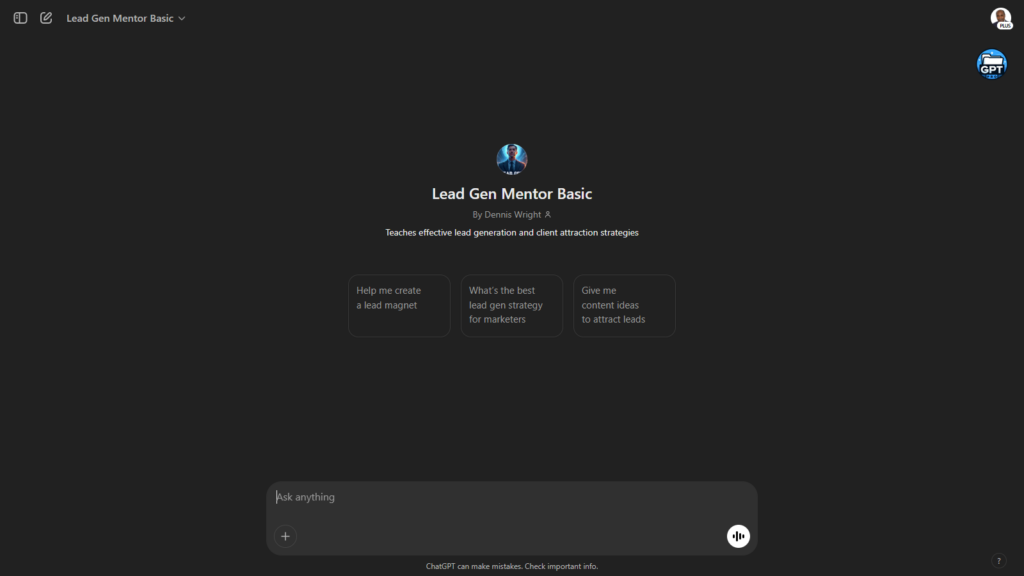
OpenAI now lets anyone build their own custom version of ChatGPT… and make it do very specific jobs:
- Writing sales emails
- Planning content calendars
- Drafting product descriptions
- Coaching users through processes
- Generating lesson plans, meal plans, workflows, and more
No code. No dev team. No “I’m not technical” excuses.
If you can describe what you want in plain English, you can build a GPT.
GPTs: Not Just Chatbots—Niche AI Assistants
Most people still think “AI = smarter Google” or “just a chatbot.”
That’s surface-level.
A well-built GPT can act like:
- A digital product (that users pay to access)
- A service assistant (that replaces repetitive work)
- A mini business (when you add funnels, bundles, and licensing)
And because GPTs are:
- Instant software (no coding)
- Nicheable (you can build for very specific audiences)
- Monetizable (free list-builder or paid Pro version)
- Evergreen (no shipping, no physical inventory, no constant updates)
…they’re almost the perfect first AI product.
You don’t need to build a complex SaaS. You just need one GPT that solves one meaningful problem for one specific audience.
Why GPTs Are Perfect for “Non-Techy” First-Time AI Entrepreneurs
Let’s break down why GPTs are uniquely beginner-friendly.
| Feature | Why It Matters |
|---|---|
| No Code Required | You don’t need technical skills or developers |
| Instant Deployment | You can build and publish within hours |
| Zero Fulfillment | Nothing to ship, print, or physically deliver |
| Recurring Revenue | You can sell access as a subscription or license |
| Built-in Trust | People already trust ChatGPT as a platform |
| 100% Digital | Margins are high—almost no cost to “duplicate” |
| Niche Personalization | Tailor tools to specific industries or use cases |
You’re not late. You’re actually early.
Most people are still in consumer mode with AI:
- “I use ChatGPT sometimes…”
- “I asked it for ideas once…”
Very few are in creator mode:
- “I built a GPT for fitness coaches.”
- “I sell a GPT bundle for real estate agents.”
- “My GPT is the lead magnet for all my offers.”
Those are the people who will look “lucky” in six months.
The “Invisible AI Business in a Weekend” Model
Let’s map out how you can go from idea → live GPT → first sales in about 48 hours.
At the center of this model are two versions of the same GPT:
- Free Version – Attracts attention, builds your list, and proves your value
- Pro Version – Expands the functionality and becomes your low-ticket paid product
With a tool like GPT Creator Pro, you can build both in one session and let the system generate your marketing assets around them.
The Six-Step Weekend Framework
If you follow these steps, you can have a real AI product live by Monday.
Step 1: Pick a Problem (Not Just a Niche)
Don’t start with, “What GPT should I build?”
Start with: “What problem is my audience sick of dealing with?”
Examples:
- Coaches who need fresh content ideas every week
- Freelancers who struggle to pitch new clients
- Real estate agents burning time on listing descriptions
- Etsy sellers dreading writing product copy
Once you lock onto a repeating problem, your GPT becomes the done-for-you shortcut.
Shortcut: Use GPT Idea Starter to brainstorm dozens of micro-niche GPT ideas and see what’s worth building and selling.
Step 2: Build a Simple, Focused GPT
Your first version doesn’t need to do everything.
It needs to:
- Solve one clear problem
- Be easy to use for non-technical users
- Deliver a quick “aha” moment that makes people think, “Wow—this is helpful.”
Example free GPT concepts:
- “Podcast Episode Planner” for new podcasters
- “30-Day Content Calendar Generator” for fitness coaches
- “Lead Magnet Idea Starter” for solopreneurs
With EasyGPT Builder, you can:
- Set the voice and tone
- Map the steps and user inputs
- Control the style and format of outputs
Think: a polished AI assistant, not a generic chatbot.
Step 3: Create the Pro Version
Now you turn that free GPT into a paid digital product (often $17–$47).
Ways to “level it up”:
- More depth – Extra outputs, more modes, or advanced options
- More assets – Add prompt packs, template PDFs, or swipe files
- More guidance – Include a short PDF guide or quick Loom training
- More specificity – Version it for sub-niches (e.g., fitness coaches, business coaches, mindset coaches)
The Pro GPT becomes your “tripwire” or low-ticket offer: small, easy to say yes to, and perfect for turning a curious user into a paying customer.
Step 4: Generate All Your Sales Assets (In About an Hour)
Here’s where most people get stuck:
“I built something great… but now I need a landing page, emails, social posts, an upsell page…”
This is exactly where EasyGPT Builder shines.
Because it already “knows” the GPT you just created, it can:
- Write your free GPT landing page
- Draft your Pro sales page/section
- Create a 3–5 email sequence to convert free users into buyers
- Generate social media posts to drive traffic
- Suggest upsell copy, bump offers, and scarcity angles
Instead of staring at a blank page, you’re copy/pasting, tweaking, and publishing.
Step 5: Launch and Promote
Once your GPT and your copy are ready, it’s launch time.
You don’t need ads or a huge audience. Start with:
- Niche communities – Facebook groups, Subreddits, Discords
- Social posts – Show your GPT’s outputs with a link to try it
- Existing traffic – Email list, blog readers, contacts, DMs
- Collaborations – Offer your GPT as a bonus for someone else’s offer or newsletter
Lead with value:
“I built a free AI tool that helps [NICHE] do [RESULT] in minutes—want to test it and give feedback?”
Low friction. High curiosity.
Step 6: Clone & Scale with Reusable Systems
Once you’ve proven your first GPT works, you have a pattern you can repeat.
- Pick a new niche (e.g., copywriters → course creators → real estate agents)
- Clone your GPT concept with niche-specific tweaks
- Re-use your funnel structure (free + Pro flow)
- Relaunch again and again with minimal extra effort
You’ve now moved from “I have one GPT” to “I have an AI product factory.”
Your 48-Hour Weekend Launch Plan
Here’s how this looks in practice.
Friday Evening
- Choose your audience and specific problem
- Use GPT Creator Pro to brainstorm and refine your GPT concept
Saturday Morning
- Build your Free GPT (instructions, persona, output format)
Saturday Afternoon
- Build your Pro GPT version
- Create bonus assets (guides, templates, checklists)
Saturday Evening
- Ask EasyGPT Builder to generate:
- Free GPT landing page
- Pro offer copy
- Email sequence
- Social promo posts
Sunday Morning
- Hook up simple delivery (Notion/GumRoad/ThriveCart/Systeme)
- Set up email delivery + follow-up
Sunday Afternoon & Evening
- Launch to your existing audience & in niche communities
- Collect initial feedback and testimonials
- Watch for first opt-ins and sales
By Monday morning, you’re not just “learning AI.”
You’re running your first AI-powered product funnel.
Finding a Profitable Niche (Without Overthinking It)
One of the biggest mistakes?
Trying to build a GPT “for everyone.”
Generic tools get ignored. Specific tools get shared and bought.
Think Micro-Niche, Not “Everybody”
Instead of “business owners,” think:
- Fitness coaches who post on Instagram
- Real estate agents who list 5+ homes per month
- Etsy store owners who sell handmade products
- YouTubers who release one new video each week
You’re looking for audiences with:
- Visible pain – They talk about their problems
- Online activity – They hang out in groups, forums, or comment sections
- Spending habits – They buy tools, courses, or templates
- Need for speed – They hate wasting time and love shortcuts
One way to remember it: L.E.A.N.
- L – Low-hanging pain points
- E – Engaged online
- A – Already spending money
- N – Need for speed & simplified solutions
A 15-Minute Niche Exercise
- List 5–10 industries you understand or are curious about.
- For each, write down 3 annoying tasks they repeat.
- Ask: “Could a GPT do this better or faster?”
- Take the best idea into EasyGPT Builder and have it draft:
- A GPT concept outline
- A sample landing page
- A simple transformation promise
Don’t chase a “perfect” niche. Start with a clear, solvable problem.
The Two-Version Strategy: Free GPT + Pro GPT
This is one of the most powerful patterns in this entire model.
The Free GPT — Your Digital Magnet
Your free GPT’s job is not to be everything. Its job is to:
- Deliver a fast, specific win
- Earn trust in seconds
- Be easy to share
- Lead naturally to the Pro upgrade
Examples of great free GPTs:
- Email Opener Generator for cold outreach
- Instagram Caption Brainstormer for real estate pros
- 30-Second YouTube Hook Builder for video creators
- Content Pillar Mapper for course creators
You can use EasyGPT Builder to:
- Design the persona
- Write onboarding instructions
- Script the “call to action” inside the GPT itself (“Want the advanced version? Here’s the link.”)
The Pro GPT — Turn Curiosity into Cash
Your Pro version is where you:
- Add more capability (extra modes, extra outputs, deeper prompts)
- Add more support (PDF guides, quick trainings, prompts swipe files)
- Add more leverage (systems, checklists, frameworks)
Price it in the $17–$47 range to make it an easy “yes.”
The magic move:
Let your free GPT softly pitch the Pro version inside its outputs.
For example, each run might end with:
“Want the full [Niche] AI Toolkit with extra templates and automation?
Tap here to unlock the Pro version.”
That’s a self-upgrading funnel built right into the product.
Creating Your Funnel & Sales Assets in Under an Hour
Here’s what you typically need:
- A landing page for the free GPT
- A Pro upgrade section or full sales page
- 3–5 emails to nurture and convert
- Social posts to drive traffic
Instead of writing all of that from scratch, you can tell GPT Creator Pro something like:
“Create a funnel for my [Niche] GPT that helps [Audience] achieve [Result]. I need a landing page, Pro upgrade pitch, 3-part email sequence, and 10 social posts.”
You’ll get:
- A clear headline & subheadline for each page
- Features + benefits breakdown
- CTA copy for opt-ins and upgrades
- Story-style or punchy email options
- Social captions tailored to your platform
Then it’s just publish, plug in your links, and go.
How to Promote the Free Version for Maximum Reach
A great GPT is only as powerful as the number of people who use it.
Here are simple, beginner-friendly promotion strategies:
1. Use a Clean, Focused Landing Page
Don’t just paste the raw GPT link everywhere.
Send people to a page that says:
“Write 30 days of Instagram content for your fitness coaching business in minutes—with this free AI tool.”
Use:
- Carrd
- Systeme
- Notion + a button
- Your WordPress site
Let GPT Creator Pro write the copy. You just plug it into your page builder.
2. Share in Niche Communities (Value First)
In groups, forums, and threads, lead with help, not hype:
“I built a free AI tool that helps [Niche] do [Result] way faster. I’m looking for a few testers—want to try it?”
That feels like collaboration, not spam.
3. Show, Don’t Tell
People don’t really “get” GPTs until they see them.
Share:
- Screenshots of input → output
- Short videos of you using the GPT
- “Before vs after” examples
Caption idea:
“This free GPT just wrote 7 days of posts for a real estate agent in 90 seconds. Want to test it?”
4. Turn Your GPT into Content
Let your GPT create:
- 10 email subject lines
- 7 reel scripts
- 30 caption ideas
Then post them as:
- “Here are 7 hooks my free AI tool wrote in 10 seconds.”
- “Use these 5 caption formulas from my free GPT—then grab it to generate more.”
Your tool becomes a content engine that promotes itself.
5. Relaunch It Weekly with a New Angle
Each week, reframe your GPT:
- Week 1: “For beginners who hate blank pages…”
- Week 2: “For coaches who need content fast…”
- Week 3: “For creators who want AI to do the heavy lifting…”
Same tool, new hook, new traffic.
Make Your GPT Share-Worthy, Not Just Useful
Function gets results.
Personality gets shares.
If your GPT feels like a bland robot, people will use it quietly.
If it feels like a persona, people talk about it.
Define:
- A name (e.g., “Reel Boss,” “Client Whisperer,” “Launch Navigator”)
- Tone (sassy, calm, hype, friendly, consultant)
- Greeting and sign-off messages
- On-brand catchphrases and CTAs
People don’t share “a GPT.”
They share:
“You’ve got to try this Reel Boss AI—it just wrote my whole content plan.”
Testing, Tuning & Increasing Your Conversions
Once you’re getting some users and sales, you’re ready to optimize.
Key areas to test:
- Your hook
- Try different headlines and promises on your landing page
- Your Pro upgrade framing
- Test price points ($17 vs $27 vs $47)
- Test emphasizing speed vs. depth vs. bonuses
- Your GPT persona
- Try calm vs. high-energy vs. playful
- Your email sequence
- Short emails vs. story-based emails
- Different subject lines and send times
- Your bonus stack
- Adding templates, swipe files, mini trainings
As a simple rule:
If you can get roughly 1 out of 3–5 free users to eventually upgrade to Pro, you’re sitting on a very scalable offer.
Leveling Up: Create a 3-GPT Bundle for Bigger Profits
Once one GPT is working, the next move is to bundle.
Example bundle for fitness coaches:
- Content Planner GPT – Plans weekly content themes
- Caption Generator GPT – Writes post captions and hooks
- DM Closer GPT – Helps with sales conversations
Instead of $27 for one GPT, you now have a $97–$197 “system”:
- Three tools
- One audience
- One outcome: more clients with less effort
Add:
- A short video walkthrough
- A quick-start PDF
- Some visual mockups (via something like PackGenie)
Now you’re not selling “a GPT,” you’re selling:
“The AI Client Magnet Toolkit for Fitness Coaches.”
Same creation time. Bigger perceived value. Higher price point.
The Minimal Tech Stack to Run It All
You don’t need 20 tools. You need a lean, reliable setup.
Here’s a simple stack:
- GPT Creation – EasyGPT Builder
- Landing Page & Funnels – Systeme, WordPress, or Carrd
- Checkout & Payments – ThriveCart, GumRoad, or Systeme
- Delivery – Notion pages, private WordPress pages, or PDFs with links
- Branding & Mockups – PackGenie or similar tools
- Email Marketing – Systeme, GetResponse, or your favorite provider
Start Now—Before the Window Closes
Right now, there is a rare overlap:
- GPTs are powerful and public
- Creation is no-code and low-friction
- Most people have no idea how to turn GPTs into products
You now know how to:
- Choose a niche and a specific problem
- Build a free GPT that attracts your ideal audience
- Create a Pro version that turns users into buyers
- Generate your funnel copy in a fraction of the usual time
- Promote your GPT with simple, repeatable tactics
- Bundle multiple GPTs into a premium kit
- Run everything with a lean, beginner-friendly tech stack
You don’t need permission.
You don’t need a team.
You don’t need six months.
You need a weekend and a decision.
Your Next Step
Don’t let this stay as “good information.”
Here’s a simple action plan:
- Pick your audience – Who do you want to help?
- List 3 recurring problems they complain about.
- Choose ONE and commit to building a GPT around it.
- Fire up EasyGPT Builder and use it to:
- Draft your GPT concept
- Build your Free and Pro versions
- Generate your landing page, emails, and social posts
- Launch your first GPT within the next 48 hours.
Your first GPT doesn’t have to be perfect.
It just has to be real.
Once it’s live, you can refine, bundle, and scale.
AI isn’t the future—it’s the right now.
The creators who win won’t be the ones who read the most posts about AI.
They’ll be the ones who build the most GPTs, ship the most offers, and treat this moment like the gold rush it is.
Be one of them.
0 Comments